

Targeting the Biology that Drives Myelodysplastic Syndromes
Why Relapsed / Refractory High-Risk MDS
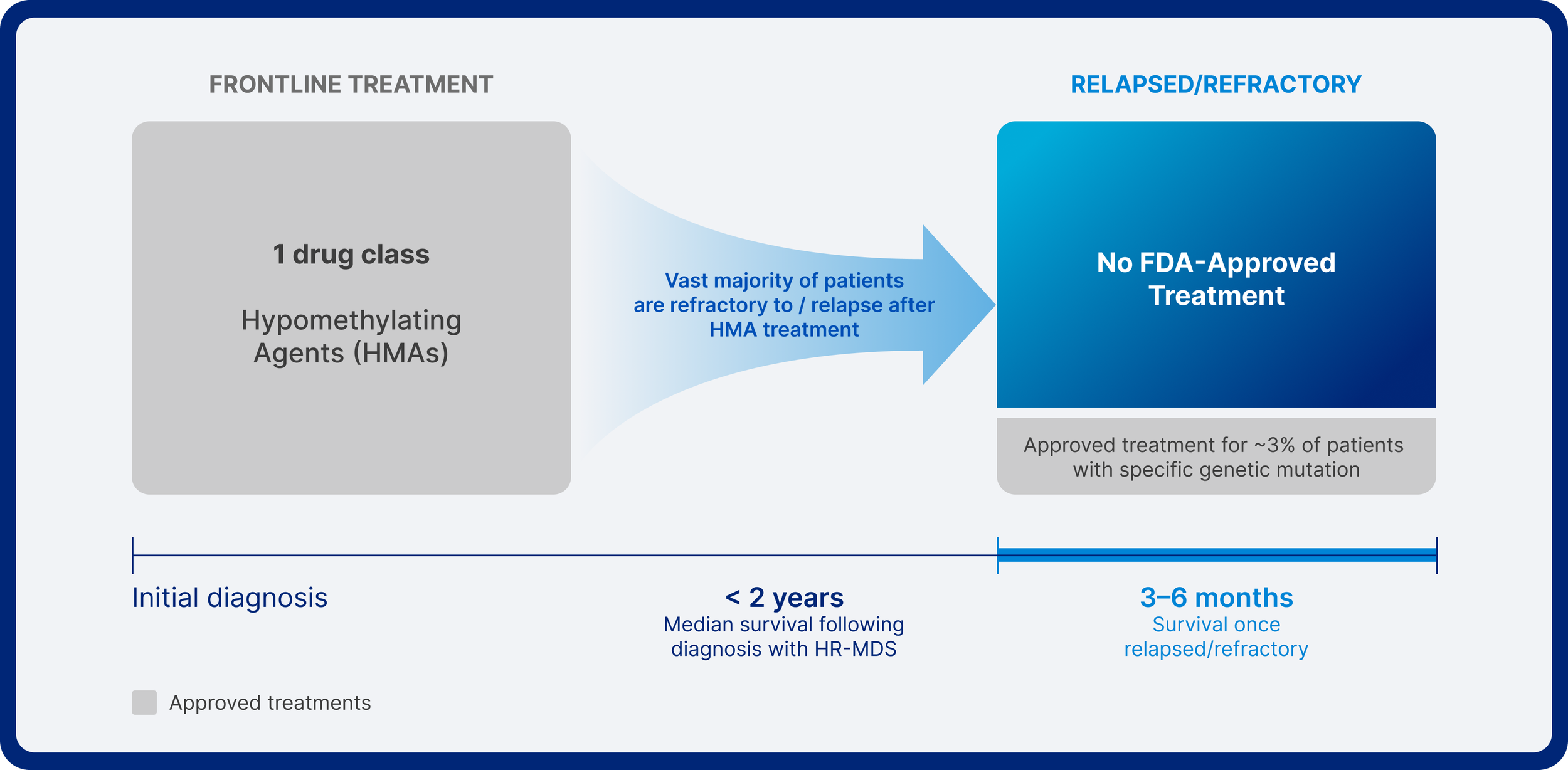
This intersection of compelling biology and significant need has shaped our commitment to relapsed/refractory high-risk myelodysplastic syndromes (MDS).
Hypomethylating agents are the standard of care for high-risk MDS, yet the vast majority of patients are refractory to or relapse after treatment. In relapsed/refractory high-risk MDS, only one treatment has been approved in the past two decades, and it targets a mutation found in ~3% of patients.
Our first-in-class antibody, LYT-200, engages a foundational driver of MDS. This approach has the potential to introduce a mutation-agnostic treatment option into the whitespace of the relapsed/refractory treatment setting.
A Foundational Target
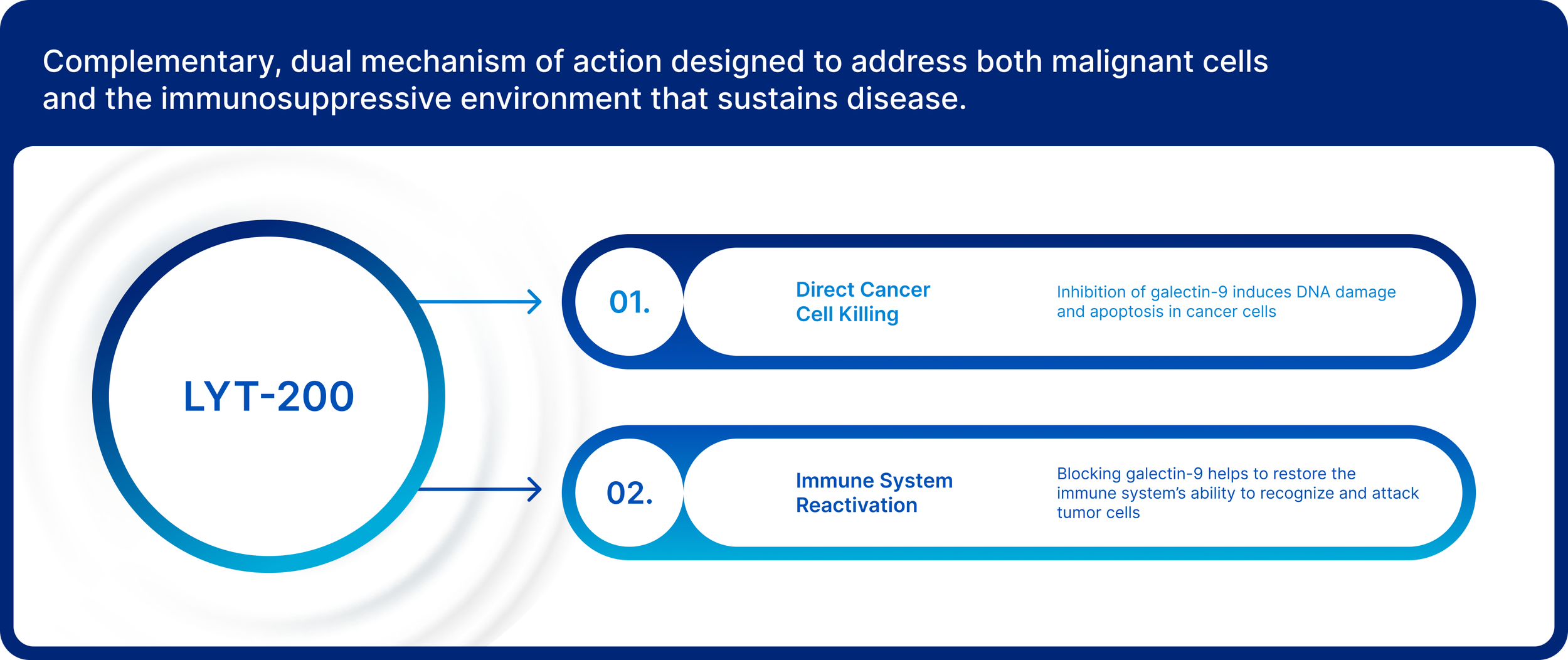
Galectin-9 is an important oncogenic driver and potent immunosuppressor that plays a central role in some of the most difficult-to-treat cancers. It has been shown to support malignant stem cell and blast cell survival while also suppressing anti-tumor immune activity. This convergence of tumor and immune biology provides a differentiated opportunity to intervene in the foundational mechanisms that drive disease.
In myelodysplastic syndromes (MDS), galectin-9 is produced by malignant blast cells. Galectin-9 levels increase with disease progression and leukemic transformation, and elevated levels are associated with shorter survival. Together, these findings suggest that galectin-9 is not simply a marker of disease, but may contribute to the underlying biology of MDS.

A Mutation-Agnostic, Dual Mechanism of Action
LYT-200 is a fully human IgG4 monoclonal antibody against galectin-9. It is designed to address the bone marrow and systemic ecosystem associated with MDS disease progression. Importantly, targeting galectin-9 is a mutation-agnostic approach aimed at disease biology rather than a specific genetic alteration.
Phase 1b Results
-
LYT-200 demonstrated compelling clinical efficacy and safety in a Phase 1b trial of patients with relapsed/refractory high-risk MDS. All patients had become relapsed/refractory to prior treatment with a hypomethylating agent.
Across all efficacy-evaluable[1] patients (n=11), LYT-200 12mg/kg in combination with a hypomethylating agent demonstrated:
27.3% complete response rate
36.3% complete response + partial response rate
9.1% partial response rate
9.1% marrow complete response rate
45.5% overall response rate
18% conversion to transplant rate
No dose-limiting toxicities
No myeloid suppression
1: Efficacy evaluable was defined in the protocol as all patients who received a minimum one full cycle of LYT-200 (four doses) and had a minimum of one post-baseline disease assessment. The intent-to-treat population was n=12.
Phase 2 Design
-
Gallop is advancing LYT-200 into Phase 2 development:
Study of Two Regimens Investigating Dose and Efficacy of LYT‑200 (anti-Galectin-9 monoclonal antibody) in Relapsed/Refractory High-Risk MDS (STRIDE-MDS)
STRIDE-MDS is a randomized, double-blind, placebo-controlled trial that is expected to enroll approximately 125 patients with relapsed/refractory high-risk MDS. Patients will be randomized 2:2:1 to receive LYT-200 at 12 mg/kg plus a hypomethylating agent (HMA), LYT-200 at 7.5 mg/kg plus an HMA, or placebo plus an HMA, respectively.